
White Cane Week (Feb 1-7)
February 1, 2026 to February 7, 2026
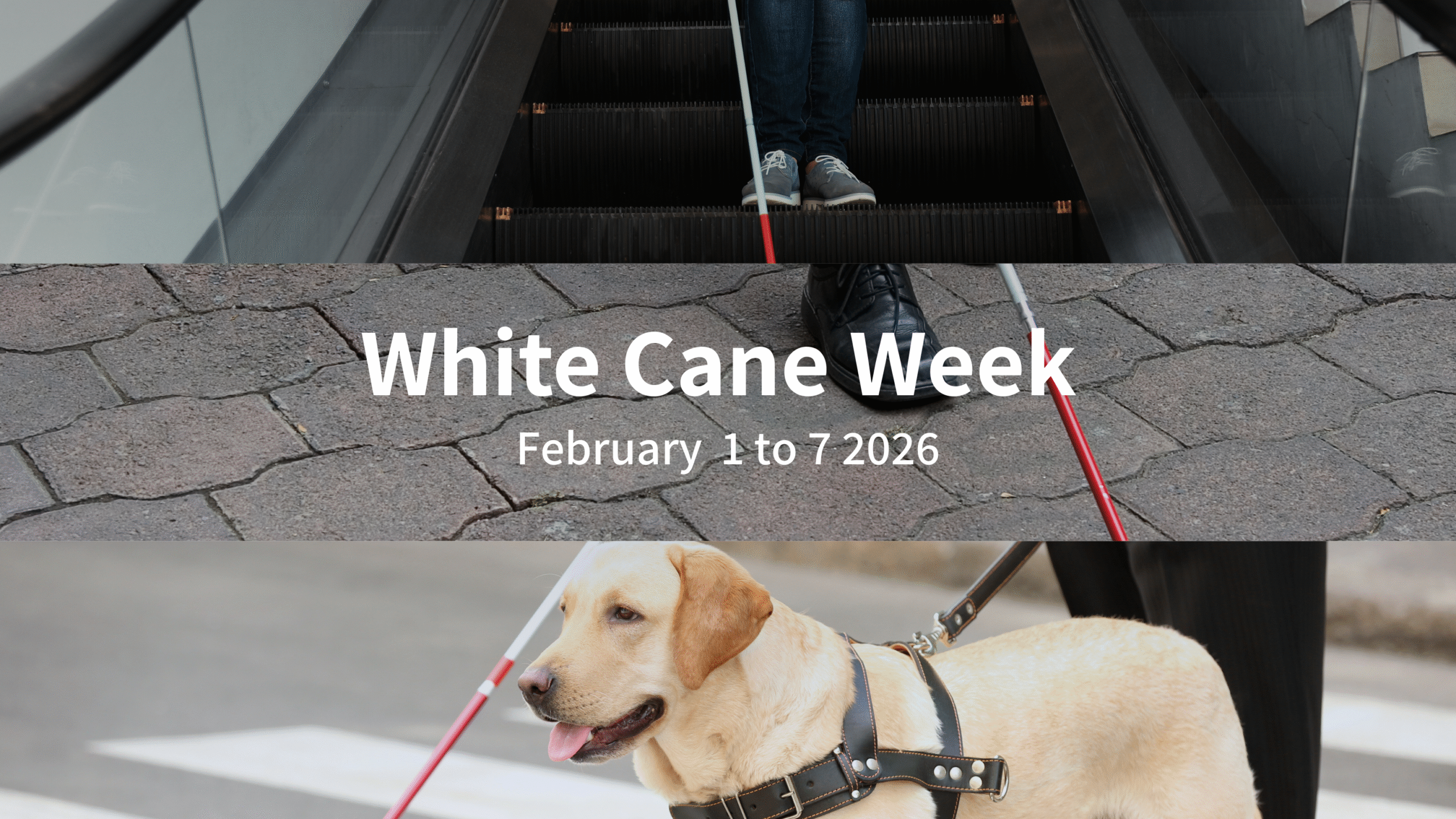
White Cane Week 2026
Dates: February 1–7, 2026
White Cane Week is observed across Canada to raise awareness about the white cane and the experiences of people who are blind or have sight loss. This week is an opportunity to learn, reflect, and promote greater understanding, accessibility, and inclusion in our communities and workplaces.
The white cane is a symbol of independence and empowerment. It is a mobility tool that supports people with sight loss in navigating their surroundings safely and confidently, not a symbol of charity or pity.
About White Canes
- White canes signify sight loss and provide tactile feedback to help individuals move safely through their environment.
- Sight loss exists on a spectrum. People who use white canes may have varying levels of vision, so it’s important not to make assumptions about what someone can or cannot see.
- The white cane supports independence and self-determination for people who are blind or have low vision.
How to be respectful and supportive
- Give space. When someone approaches using a white cane, avoid blocking their path and allow a clear route of travel.
- Do not assume help is needed. If someone appears unsure, introduce yourself and ask if they would like assistance. Respect their response.
- Never touch or grab someone’s white cane. If assistance is needed, the individual will explain how you can help.
- Speak naturally and directly. If needed, identify yourself so the person knows you are speaking to them.
- If you are driving, remember that a pedestrian using a white cane may not see hand gestures or signals. Always come to a complete stop and allow them to cross safely.
CNIB programs and services
CNIB (Canadian National Institute for the Blind) offers a range of programs and services available free of charge to people with sight loss, as well as to families, caregivers, educators, health care providers, municipalities, and the broader community.
Support is available to people across the spectrum of sight loss, not only those who are blind.
To learn more about CNIB programs and services, visit www.cnib.ca.
Why observances like White Cane Week matter
Observing White Cane Week helps build awareness about sight loss, challenges harmful assumptions, and encourages more accessible and inclusive environments. When barriers are removed, people who are blind or have low vision can fully contribute their skills and talents at work and in their communities.
CCRW is proud to recognize White Cane Week and to support the ongoing work toward accessibility, inclusion, and equitable employment for people with disabilities.

Other Events
view all

June 29, 2026
Cabana, 11 Polson St, Toronto, ON M5A 1A4InclusiV: Toronto’s All-Inclusive Dance Party





March 26, 2026
Virtual5 Bold Predictions About Disability that Will Define 2026 | Webinar

June 2, 2026
VirtualBuilding an Accessible Canada | NAAW Virtual Conference with Easter Seals and BCANDS

March 10, 2026
Holiday Inn Downtown Toronto CentreInclusive Tourism Employment Conference Toronto | March 10, 2026

March 5, 2026
VirtualCreating Inclusive Employment – Youth Summit and Symposium (virtual via Zoom)

March 18, 2026
VirtualNavigating Employment as a d/Deaf or Hard-of-Hearing Job Seeker in B.C.

Subscribe
Sign up to receive updates from CCRW.