
November 25, 2025
Indigenous Disability Awareness Month: Honouring Strength, Identity, and Self-Determination

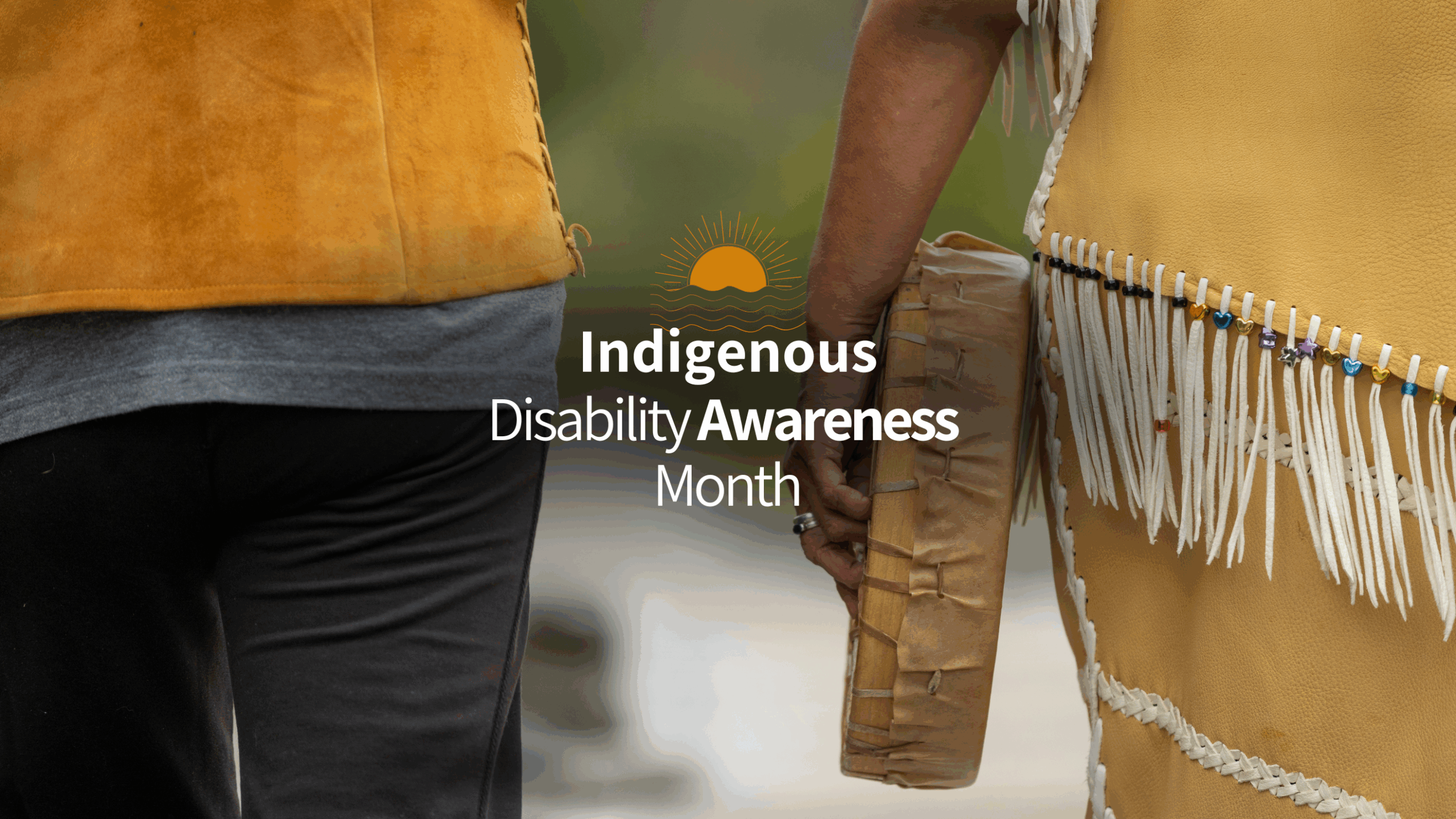
Indigenous Disability Awareness Month: Honouring Strength, Identity, and Self-Determination
Contributors: Elmira Izadi and Noor Al-Azary
Every November, Indigenous Disability Awareness Month (IDAM) invites people across Canada to recognize and honour the contributions, leadership, and lived experiences of Indigenous persons with disabilities. First established in 2015 by IDC/BCANDS, IDAM is now observed nationally and internationally as a time to celebrate strength, raise awareness about inequities, and advance culturally grounded disability inclusion.
This month is not only about visibility, but also about affirming identity, challenging colonial narratives, and committing to systemic change. Indigenous persons with disabilities hold knowledge, culture, and community roles that have long been undervalued within Western disability and employment systems.6,7 Their experiences remind us that inclusion is not a gesture; it is a responsibility.
As part of this commitment, CCRW is honoured to be partnering with IDC/BCANDS on our upcoming Trends article, which explores the intersections of Indigeneity, disability, and employment across Canada. Read our upcoming Trends article on the Intersections of Indigeneity and Disability on December 5th! This work reinforces what Indigenous communities have long emphasized: disability inclusion must be grounded in cultural safety, Indigenous leadership, and relational ways of knowing.
Why Indigenous Disability Awareness Month Matters
Indigenous Peoples experience some of the highest disability rates in Canada, shaped by generations of systemic discrimination, colonial policies, and ongoing underinvestment.2 Yet, Indigenous disability experiences remain underrepresented in mainstream disability discourse.
IDAM brings attention to:
- The leadership and cultural strengths of Indigenous persons with disabilities
- The impacts of colonialism, including residential schools, displacement, and persistent discrimination.11,9
- The value of Indigenous knowledge systems in shaping accessible and culturally grounded approaches to wellness
- The need for Indigenous-led employment, disability supports, and data systems
IDAM is a reminder that disability inclusion cannot be separated from Indigenous sovereignty, cultural identity, or the lived realities of colonial harm.
Honouring Indigenous Perspectives on Disability and Work
Across many Indigenous nations, disability is understood through community belonging, balance, and relationality. This means that who we are and our wellbeing is shaped by our relationships with family, community, land, and the natural world, instead of through deficit or abnormality. Elders often describe each person’s gifts and responsibilities rather than focusing on impairments.4,7 Many Indigenous languages do not have a direct translation for “disability,” reflecting a worldview that emphasizes inclusion rather than seeing disability as a problem to be fixed.6
These perspectives challenge Western medical systems that often focus only on diagnosing disability or measuring what a person can or cannot do. For Indigenous persons with disabilities, navigating colonial workplaces can create tension when systems do not align with the relational definitions of disability and work.8
Indigenous Disability Awareness Month honours these Indigenous frameworks and reminds us why the Canada’s approach to disability inclusion must embrace these definitions.
Let’s look at Sandra Pronteau’s story, which shows us how disability and Indigeneity are shaped by colonial systems, but also by community, strength, resilience, and identity.
Sandra Pronteau is a Cree-Métis and Ojibwe woman from Northern Manitoba, who embodies the resilience at the heart of Indigenous Disability Awareness Month.
Born with congenital disabilities linked to industrial contamination, Sandra’s early life was profoundly shaped by the Sixties Scoop – a policy that forcibly removed Indigenous children from their families into non-Indigenous foster care.9 She experienced instability, loss of culture, and the absence of culturally grounded disability supports. Later, as an adult, Sandra survived medical coercion during pregnancy, echoing Canada’s long history of forced sterilization targeting Indigenous and disabled women.
Despite these harms, Sandra transformed her lived experience into community leadership. After moving to British Columbia, she completed a Family Community Counselling certificate and spent nearly a decade supporting women in Vancouver’s Downtown Eastside, where many are navigating disability, poverty, violence, and trauma. Sandra’s success showcases how colonial systems have influenced experiences of disability and Indigeneity, while highlighting the importance of community, and identity.
Barriers Rooted in Colonial Systems
The inequities faced by Indigenous persons with disabilities today are rooted in long histories of ongoing systems that make it harder for Indigenous persons with disabilities to access opportunities, and not individual limitations.
Structural Barriers
Limited access to stable, culturally grounded employment opportunities, especially in rural, northern, and remote communities.5
Systemic Racism & Ableism
Discrimination in hiring, exclusion in workplace cultures, and standardized accommodation processes misaligned with Indigenous ways of knowing.8
Educational Inequities
The legacy of residential schools continues to shape educational attainment, access to training, and trust in institutions.11,1
Cultural Mistrust
Experiences of imposed diagnoses, forced institutionalization, and extractive research contribute to deep mistrust toward services that lack cultural grounding.2
Geographic & Technological Barriers
Many remote communities lack reliable internet, transportation, or accessible local services, restricting access to employment supports.
Pathways Forward: What Inclusion Should Look Like
Evidence across Canada highlights practices that support meaningful, culturally grounded employment inclusion. These practices encouraging employment inclusion work to ensure Indigenous persons with disabilities have equal access to good jobs, and workplaces that respect their identities and their ways of understanding work.
Indigenous-Led, Community-Driven Programs
Programs rooted in Indigenous leadership – such as those created through the Aboriginal Skills and Employment Training Strategy (ASETS) – are more effective and more trusted.3
Holistic and Wraparound Supports
Employment success depends on culturally grounded supports connected to health, housing, mental wellness, family, and community.8
Flexible, Culturally Safe Approaches
Rigid Western expectations of productivity and independence must give way to relational, flexible, and community-centric models.
Sustained Employer Partnerships
Research shows that culturally safe training, proactive accommodations, and long-term employer collaboration increases employment outcomes for Indigenous persons with disabilities.10,8
A Call to Action
This November, we invite you to:
- Learn about Indigenous Disability Awareness Month
- Support Indigenous-led disability organizations such as IDC/BCANDS
- Reflect on how systems can better honour Indigenous definitions of ability, identity, and wellness
- Create or advocate for culturally safe, accessible workplace environments
- Celebrate and uplift the voices of Indigenous persons with disabilities
Indigenous persons with disabilities are knowledge keepers, leaders, caregivers, creators, and changemakers. This month, we honour their strength. Every month, we commit to building a future where their rights, identities, and contributions are fully recognized and respected.
References
- Bombay, A., Matheson, K., & Anisman, H. (2013). The intergenerational effects of Indian Residential Schools: Implications for the concept of historical trauma. Transcultural Psychiatry.
- Durst, D., South, S. M., & Bluechardt, M. (2006). Urban First Nations People with Disabilities Speak Out. Journal of Aboriginal Health, 35, 34–43.
- Employment and Social Development Canada [ESDC]. (2020). Evaluation of the Aboriginal Skills and Employment Training Strategy and the Skills and Partnership Fund. Canada.ca
- Hele, K. S. (2021). Indigenous Elders in Canada. The Canadian Encyclopedia
- Indigenous Corporate Training Inc. [ICTINC]. (2019). 8 Basic Barriers to Indigenous Employment. Working Effectively with Indigenous Peoples
- Ineese-Nash, N. (2020). Disability as a colonial construct. Canadian Journal of Disability Studies
- Lovern, L. L. (2022). Indigenous Concepts of Difference. Disability Studies Quarterly. https://doi.org/10.18061/dsq.v41i4.8468
- Rivas Velarde, M. (2015). Indigenous Persons with Disabilities: Access to Training and Employment. https://archive-ouverte.unige.ch/unige:125561
- Royal Commission on Aboriginal Peoples [RCAP]. (1996). Gathering Strength (Volume 3). PDF
- Shier, M., Graham, J. R., & Jones, M. E. (2009). Barriers to employment as experienced by disabled people. Disability & Society, 24(1), 63–75.
- Truth and Reconciliation Commission of Canada [TRC]. (2015). Honouring the Truth, Reconciling for the Future. PDF

Subscribe
Sign up to receive updates from CCRW.